

Via Francigena, Lucca to Siena: What Seven Days on Tuscany’s Great Pilgrim Road Actually Involve
In 990 AD, an English archbishop named Sigeric the Serious walked from Canterbury to Rome. He went to collect his pallium from Pope John XV. On the way home, he wrote down the 79 stages of his journey. That simple list would later become the backbone of one of Europe’s great long-distance trails. Today we call it the Via Francigena. People still walk it, though not for church business. They walk it to slow down, to cover ground on foot, and to see a landscape one village at a time — much as Sigeric did.
The full route runs roughly 1,900km from Canterbury to Rome. Since 2019, a southern extension adds more than 1,000km further south, to Santa Maria di Leuca on Italy’s “heel.” That brings the whole route to around 3,200km. Almost nobody walks all of it at once. Most people choose one section instead. The stretch through Tuscany between Lucca and Siena is one of the most popular choices. It makes a good place to start. It covers about 130km (80 miles) over seven or eight walking days, through a landscape many people only know from postcards — until they stand in the middle of it.
This guide looks at what that stage actually involves. It covers what you will walk through, how hard it is day by day, and the history that makes each stop worth more than just a place to sleep.
What the Via Francigena Actually Is
It helps to know what you are walking. Many websites describe the route’s status wrongly. It is not, itself, a UNESCO World Heritage Site, even though people often claim it is. It does hold a different honour, though: the Council of Europe named it a Cultural Route in 1994. This is the same category as the Camino de Santiago in Spain. Nobody built the Via Francigena as one single path. It grew over time as a “bundle of roads.” Pilgrims, traders, and armies all used these roads through the Middle Ages. The roads met at the easiest places to cross a river or a mountain.
Some of the towns along the way carry UNESCO status in their own right, though — including Siena and San Gimignano, both on this Lucca-to-Siena stage. That is part of what makes this section so rewarding. You are not just walking through history. Most nights, you sleep in it too.
Day by Day: Lucca to Siena
A typical self-guided trip on this stage covers eight days. The first day is for settling in at Lucca. Then come seven walking days to Siena, averaging around 11 miles (18km) a day. Two of these days are shorter, falling roughly in the middle of the week. Across the whole week, you climb a total of about 7,900ft (2,400m). That sounds like a lot, but it builds up through rolling hills, not one hard climb. It matches the trip’s “moderate” rating: demanding, but not extreme.
Lucca: The Starting Point
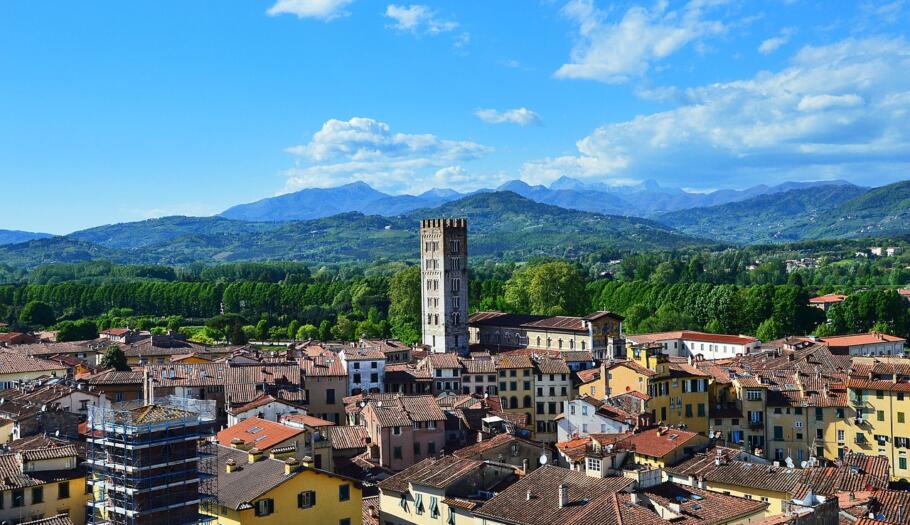
Arrive a day early if you can. Renaissance walls enclose the old town — 4.2km of them, still standing whole, among the best-preserved city walls in Europe. Builders raised them between 1504 and 1648. Inside, you can walk the historic centre easily, and cars rarely enter it. The city’s cathedral, San Martino, holds the Volto Santo, a wooden crucifix that has drawn pilgrims for well over a thousand years. Legend says Nicodemus carved it, and that it reached Lucca on a boat with no crew. Whether or not you believe the story, it explains why Lucca mattered so much on the pilgrim route: medieval travellers came here specifically to see it.
Lucca to San Miniato
From Lucca, the walk begins through quiet countryside to Altopascio (about 11 miles/18km, 820ft/250m ascent). The town takes its name from the medieval Hospital of the Order of Altopascio, which once cared for pilgrims walking this same route. Next, the path climbs to San Miniato (13 miles/22km, 1,970ft/600m ascent) — the biggest climb of the week. It ends at a hilltop town with wide views back over the ground you have just covered.
Into Chianti Country: San Gimignano
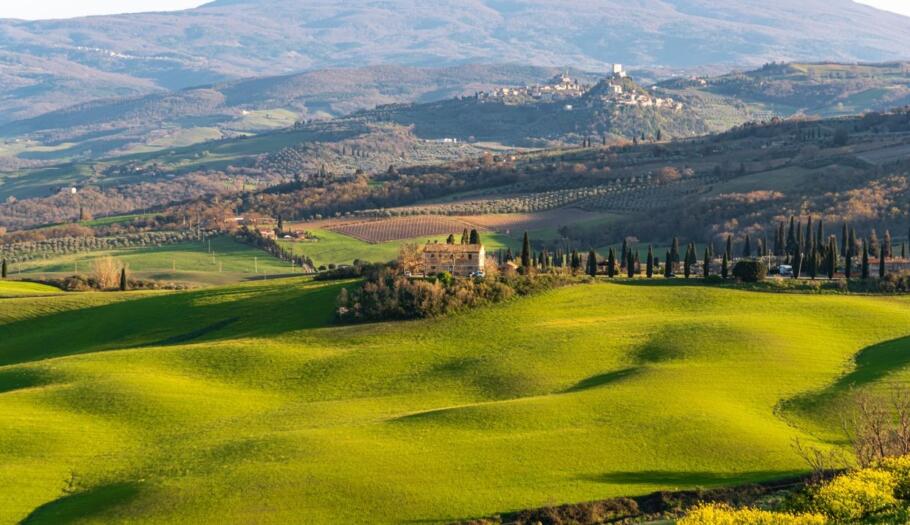
The middle days move into classic Tuscan countryside: vineyards, olive groves, and the gentle, rolling hills the region is known for. This takes you to Gambassi Terme (13 miles/24km) and then on to San Gimignano — a shorter day at 8 miles (14km), and one of the real highlights of the week.
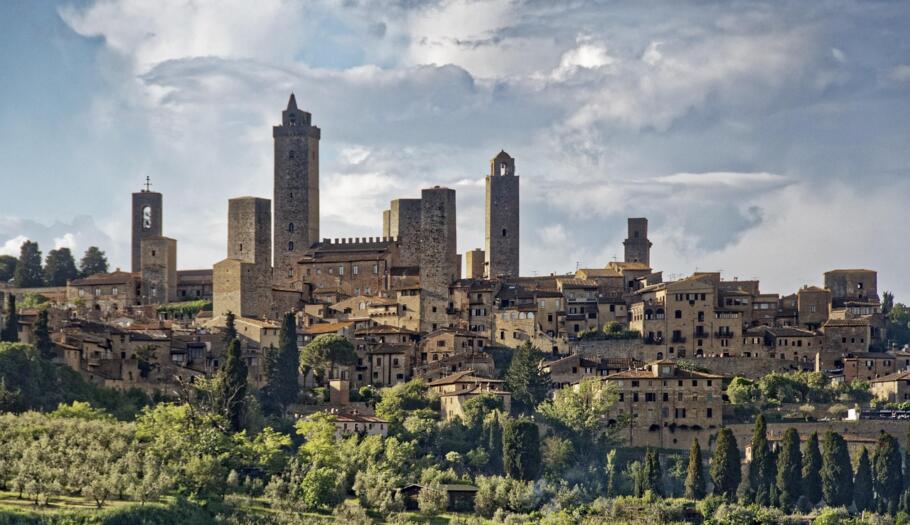
San Gimignano’s skyline speaks for itself. Wealthy families here once built around 72 tower-houses to show off their status. Only 14 remain standing today. The town’s historic centre has held UNESCO World Heritage status since 1990. Its complete medieval layout earned that status, along with frescoes by artists including Benozzo Gozzoli and Domenico Ghirlandaio. Medieval pilgrims knew San Gimignano well too, as a regular resting point on this same route — which makes arriving on foot feel more connected to its history than arriving by coach.
Colle di Val d’Elsa and Monteriggioni
A short day to Colle di Val d’Elsa (8 miles/13km) comes next, followed by a longer one to Monteriggioni (11 miles/18km). This small fortress village looks so striking that Dante used its towers in a simile in the Inferno. He compared the ring of towers on its walls to the giants he meets near the pit of Hell. Siena built the village between 1213 and 1219 as a defensive outpost against Florence. Its 570-metre ring of walls and towers survives almost fully intact today. You can walk the whole village in under an hour, but it is worth staying the evening.
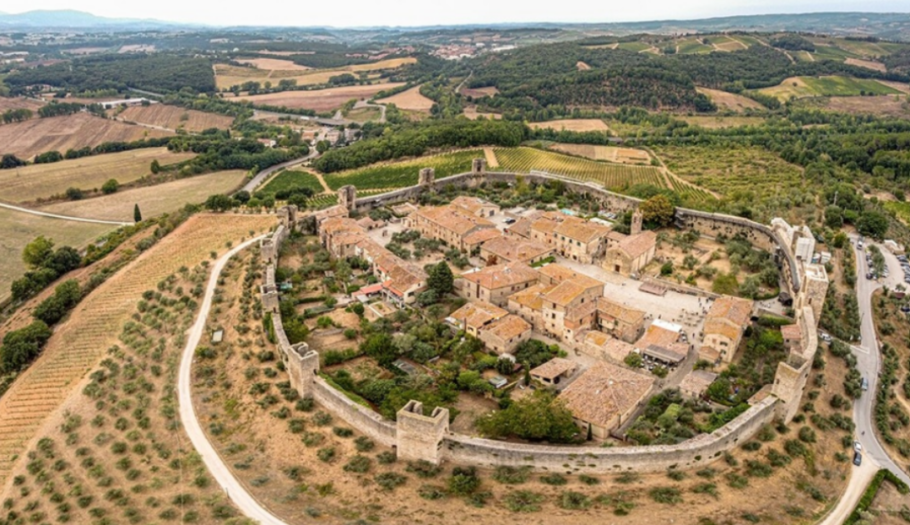 Image by Lthelion – Own work, CC BY-SA 4.0, https://commons.wikimedia.org/w/index.php?curid=111845746
The Final Day: Arriving in Siena
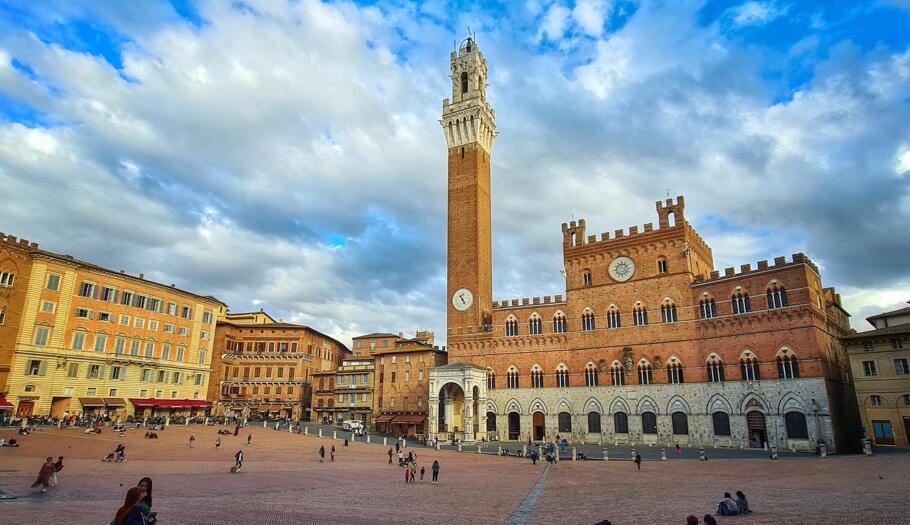
The final day (12 miles/20km, 1,476ft/450m ascent) brings you into Siena — a fitting place to finish. Siena’s historic centre has held UNESCO World Heritage status since 1995. Three hills meet at its heart, at the shell-shaped Piazza del Campo. This square still beats as the centre of city life, and twice a year it becomes the track for the famous Palio horse race. Arriving here on foot, tired after a week of walking, feels very different from stepping off a train.
How Hard Is It, Really?
This stage carries a moderate difficulty rating, and that rating is honest, not softened for marketing. Most days fall between 8 and 13 miles. You will cross a mix of quiet country paths, farm tracks, and some short stretches on village roads. The ground itself is not technical. The real challenge comes from stacking several walking days in a row, so reasonable fitness before you go matters more than any single day’s distance. The two shorter days, on either side of San Gimignano, fall at a good point in the middle of the week. They help break up what would otherwise be seven full days back to back.
If you are training for a trip like this, simply walk regularly in the weeks before you go. Wear the shoes or boots you plan to bring. Several easier walks spread over a few weeks will help you more than one hard session right before departure. Comfortable, broken-in footwear will improve your week more than almost anything else.
The Pilgrim Passport, If You Want One
You do not need religious reasons to get a credenziale, or pilgrim passport. It costs a few euros, and you can pick one up at tourist offices and pilgrim points along the route, including in Lucca and San Miniato. As you walk, accommodation, churches, and cafés will stamp it for you. It makes a nice way to mark each day. If you later walk the final 100km into Rome, a fully stamped credenziale lets you claim the Testimonium — the Via Francigena’s version of the Compostela certificate on the Camino de Santiago. On a one-week stage like this, most walkers collect the stamps simply as a keepsake, not for the certificate itself.
Getting There and Away
Trains connect Lucca well to Florence, Pisa, and other major Italian cities. Pisa International Airport sits about 30 minutes away by train, making it a simple starting point for UK travellers. At the other end, Siena offers regular bus and rail links to Florence, Rome, and Pisa. You can easily arrange onward travel, or a flight home, from there — whether you finish the walk in Siena or continue further south along the route.
Making the Walk Easier on Yourself
Logistics, more than fitness, decide whether a week like this feels comfortable or feels like hard work. Not carrying a full pack all day helps. So does having accommodation booked ahead in villages where choices can run thin. So does trusting that your route notes are accurate before you rely on them. A self-guided package fills exactly that gap. Maximum Adventure’s Via Francigena Lucca to Siena trip includes seven nights in hand-picked accommodation along the route, daily luggage transfers between stops, and a full pre-departure information pack with route notes. That leaves the walking as the only thing you need to think about each day. It runs as a self-guided trip, not a group tour, so you walk at your own pace and stop where you like. We simply handle the logistics for you.
Frequently Asked Questions
Is the Via Francigena as busy as the Camino de Santiago? No. It sees far fewer walkers, especially outside July and August. Even San Gimignano and Siena, both popular with day-trip coach tours, feel different early in the morning or in the evening, when you arrive on foot instead of by bus.
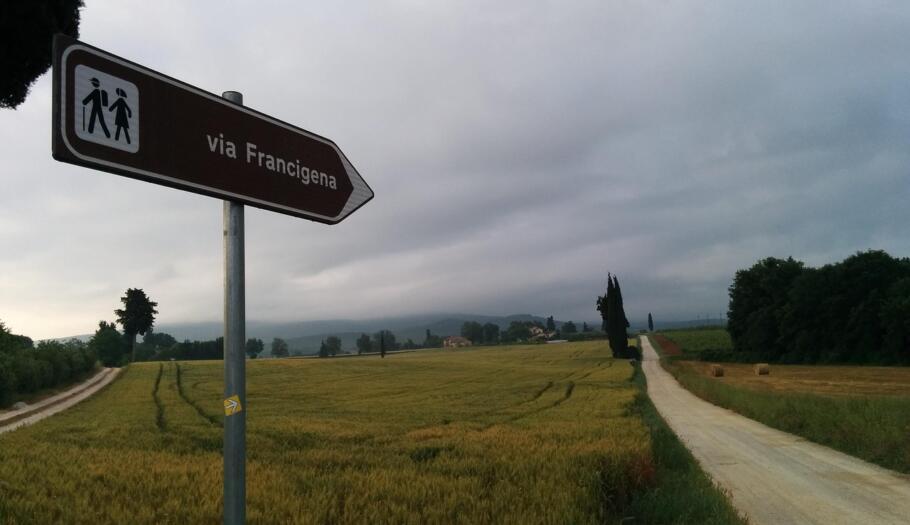
Do I need to speak Italian? It helps in smaller villages, but you can manage without it. English is widely spoken in accommodation and in the larger towns on this stage. Waymarking on the route (a white pilgrim figure on a red background) stays clear and well kept on the Italian section.
Can I walk only part of this stage if seven days is too long? Yes. You can shorten the daily distances or adjust the itinerary. Maximum Adventure also offers the neighbouring Italian stages — both before and after this one — as separate, shorter trips, if a full week is more than you want.
What is the best time of year to walk it? Spring (April–June) and early autumn (September–October) usually offer the most comfortable walking temperatures in Tuscany, avoiding the heat of high summer. This trip runs across both of these windows.
Will I need to carry my luggage each day? No. Daily luggage transfers are included, so you walk with just a day pack. We move your main bag ahead to that night’s accommodation for you.
Is this trip suitable for solo travellers? Yes. A single room supplement applies, as it does on most self-guided walking holidays where accommodation is priced per person.
Ready to walk it? See dates, pricing and full trip details for the Via Francigena – Lucca to Siena, 7 Nights.